
Book Drop: Thermo
On energy, entropy and life
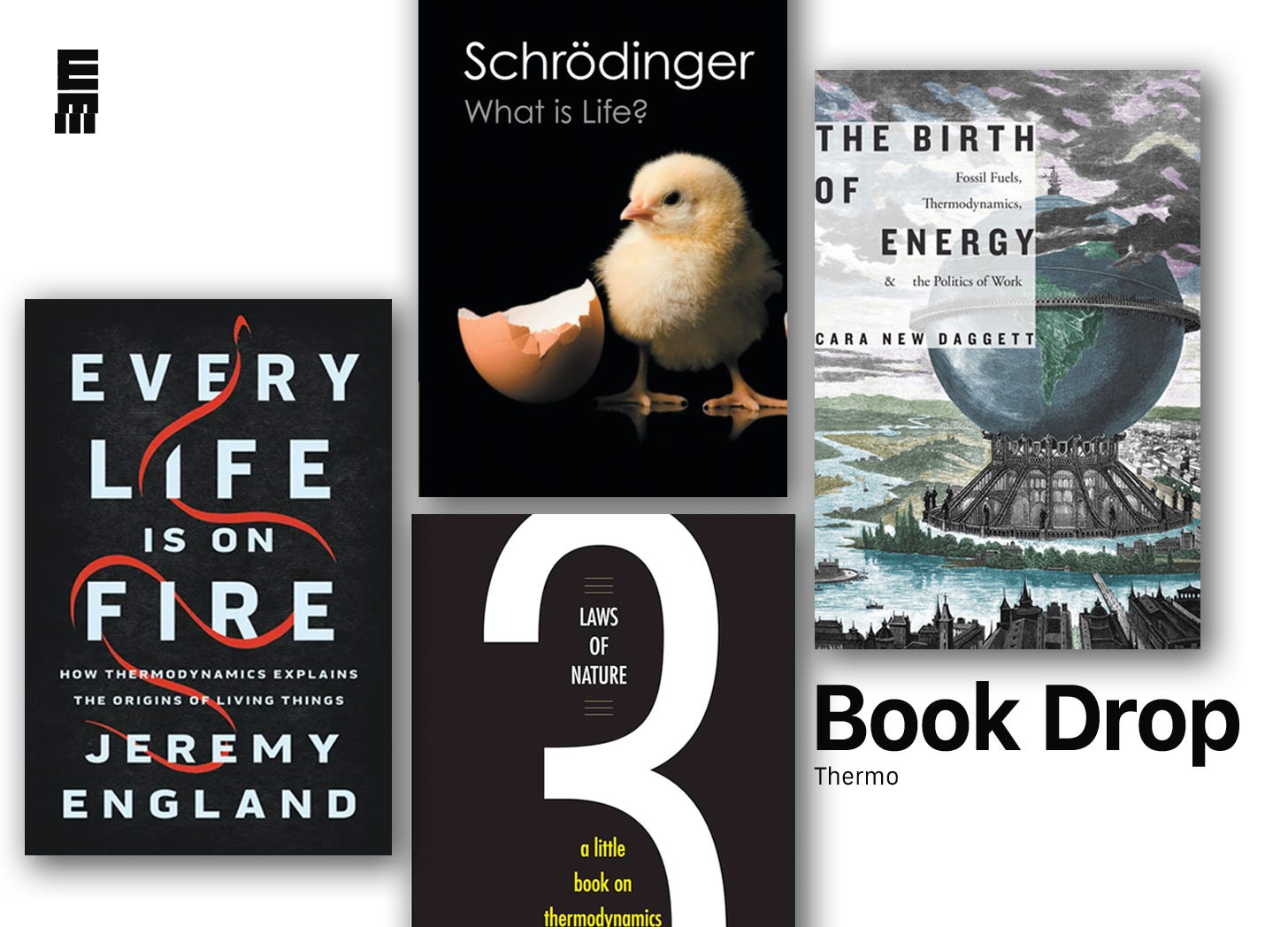
Book Drop is a new series by Emergetic that shares the best books, papers and resources that I stumble across. Sometimes they’ll be grouped around a theme (like today), a collection of disparate pieces, or just a single great work. This is all in an effort to keep my winding path of research as accessible as possible and hopefully share something that sparks your curiosity.
As an undergrad, I was required to take a series of physics classes and, semester after semester, the trend became clear — these were just calculus classes. This was a problem because I despised calculus (probably because I wasn’t any good at it). Better yet, the engineers my senior warned me that the worst was yet to come. A giant, glowing beast of derivatives and integration stood between me and graduation; it went by the name of thermodynamics.
When I switched majors from mechanical to civil engineering, I considered myself lucky for having permanently dodged the thermo bullet. The subject isn’t required for civils (and certainly not required for architects) though it began popping up more regularly as my research focused-in on topics of construction ecology, energy and emergy. A few weeks ago, I bit the bullet and dove into a few books on the subject. What I found was not only a rapturous and enlightening field of science but a new philosophy. The best part: no calculus required.
Of all the sciences, thermodynamics is the most likely to be true.
-Albert Einstein, paraphrased in Three Laws of Nature
Energy is everything, all the nouns and verbs. As Vaclav Smil put it: “Energy is the only universal currency: one of its many forms must be transformed to get anything done.” Far beyond just electricity or fossil fuels, the broad term “energy” is also material. You already know this though, thanks to world’s most famous equation: E=mc2, where Energy(E) equals mass(M) times a constant squared(c). In other words, mass and energy are interchangeable.
This realization makes thermodynamics (the study of energy and how it transforms) imperative for architects and engineers alike. The two professions orchestrate vast quantities (and qualities) of energy not only in the fuel used to condition their buildings or transport its heavy parts to site, but in the materials themselves. Thermodynamics asks us to adopt a more refined definition of the often misused, catchall term “energy.” At a time when energy-consciousness is the focal point of our climate conundrum, there is no better time to better understand how encompassing it actually is.
Einstein once claimed that, of all the sciences, thermodynamics is the most likely to be true.1 Curiously, thermo is as much a philosophy as it is a science — The Birth of Energy unpacks why this is. Its laws are not only applicable to your life but can help explain the existence of life itself (see Every Life is on Fire: How Thermodynamics Explains the Origins of Living Things and What is Life? by Erwin Schrödinger). Learning more about thermo has changed the direction of my research and, more generally, how I see the world.
Here are a few books that helped start me on my (math-free) journey into thermodynamics:
The Books
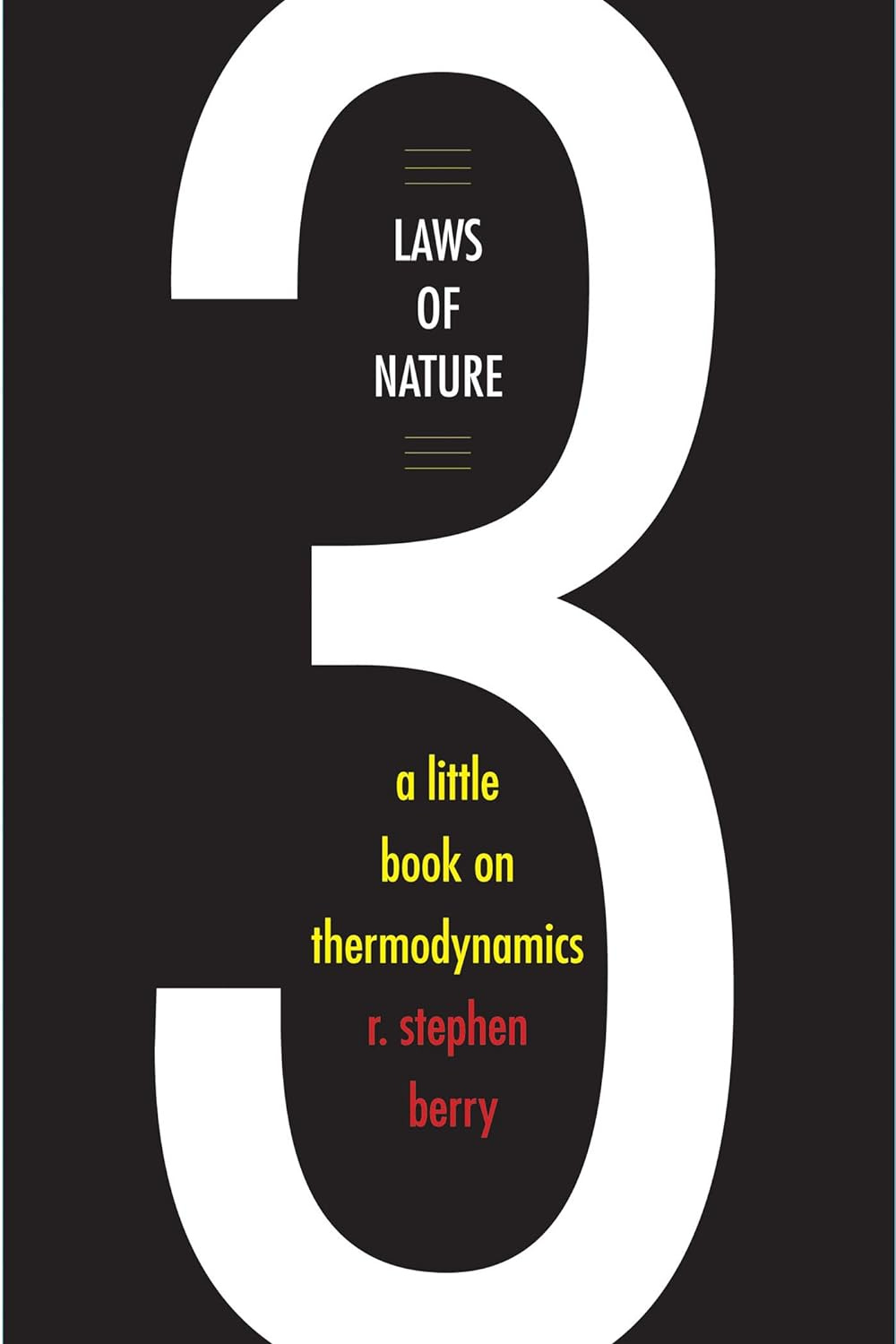
Three Laws of Nature: a Little Book on Thermodynamics by Stephen Berry
From the Publisher: A short and entertaining introduction to thermodynamics that uses real-world examples to explain accessibly an important but subtle scientific theory
A romantic description of the second law of thermodynamics is that the universe becomes increasingly disordered. But what does that actually mean? Starting with an overview of the three laws of thermodynamics, MacArthur “genius grant" winner R. Stephen Berry explains in this short book the fundamentals of a fundamental science. Readers learn both the history of thermodynamics, which began with attempts to solve everyday engineering problems, and ongoing controversy and unsolved puzzles. The exposition, suitable for both students and armchair physicists, requires no previous knowledge of the subject and only the simplest mathematics, taught as needed.
With this better understanding of one science, readers also gain an appreciation of the role of research in science, the provisional nature of scientific theory, and the ways scientific exploration can uncover fundamental truths. Thus, from a science of everyday experience, we learn about the nature of the universe.
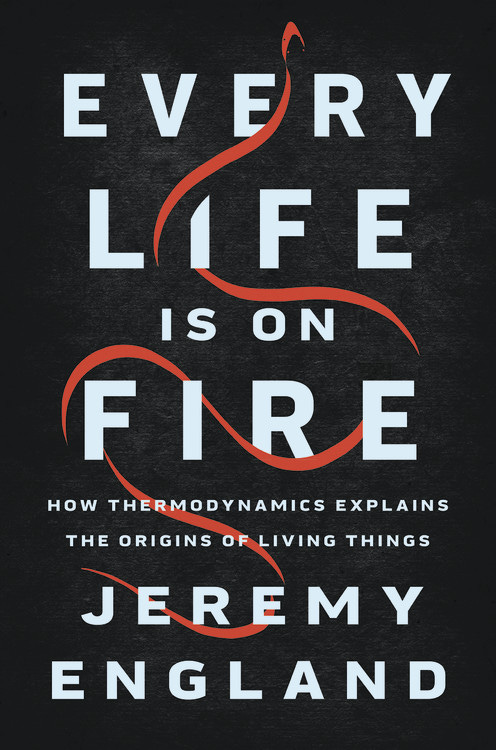
Every Life is on Fire: How Thermodynamics Explains the Origins of Living Things by Jeremy England
From the Publisher: Why are we alive? Most things in the universe aren't. And if you trace the evolutionary history of plants and animals back far enough, you will find that, at some point, neither were we. Scientists have wrestled with this problem for centuries, and no one has been able to offer a credible theory. But in 2013, at just 30 years old, biophysicist Jeremy England published a paper that has utterly upended the ongoing study of life's origins. In Every Life Is On Fire, he describes, for the first time, his highly publicized theory known as dissipative adaptation
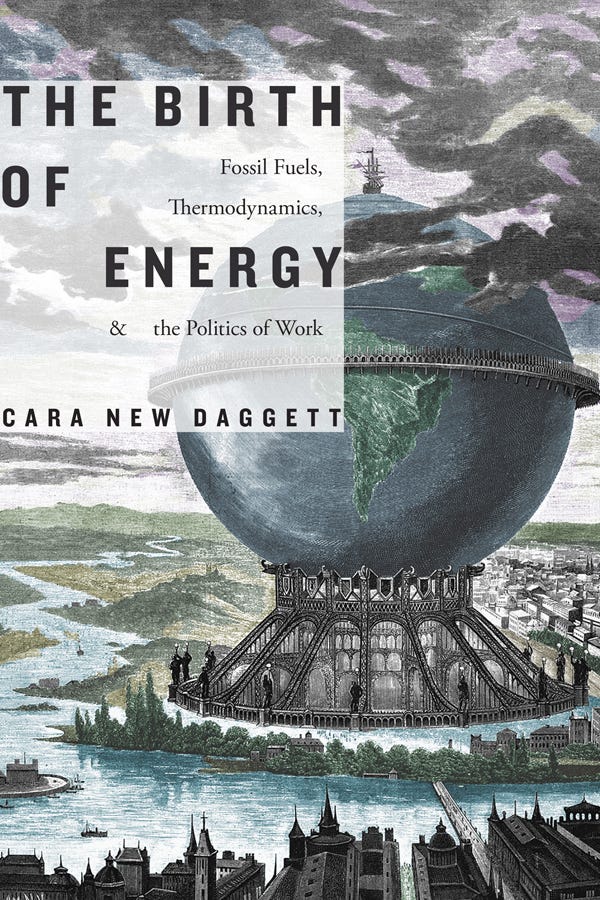
The Birth of Energy: Fossil Fuels, Thermodynamics, and the Politics of Work by Cara New Daggett
From the Publisher: In The Birth of Energy Cara New Daggett traces the genealogy of contemporary notions of energy back to the nineteenth-century science of thermodynamics to challenge the underlying logic that informs today's uses of energy. These early resource-based concepts of power first emerged during the Industrial Revolution and were tightly bound to Western capitalist domination and the politics of industrialized work. As Daggett shows, thermodynamics was deployed as an imperial science to govern fossil fuel use, labor, and colonial expansion, in part through a hierarchical ordering of humans and nonhumans. By systematically excavating the historical connection between energy and work, Daggett argues that only by transforming the politics of work—most notably, the veneration of waged work—will we be able to confront the Anthropocene's energy problem. Substituting one source of energy for another will not ensure a habitable planet; rather, the concepts of energy and work themselves must be decoupled.
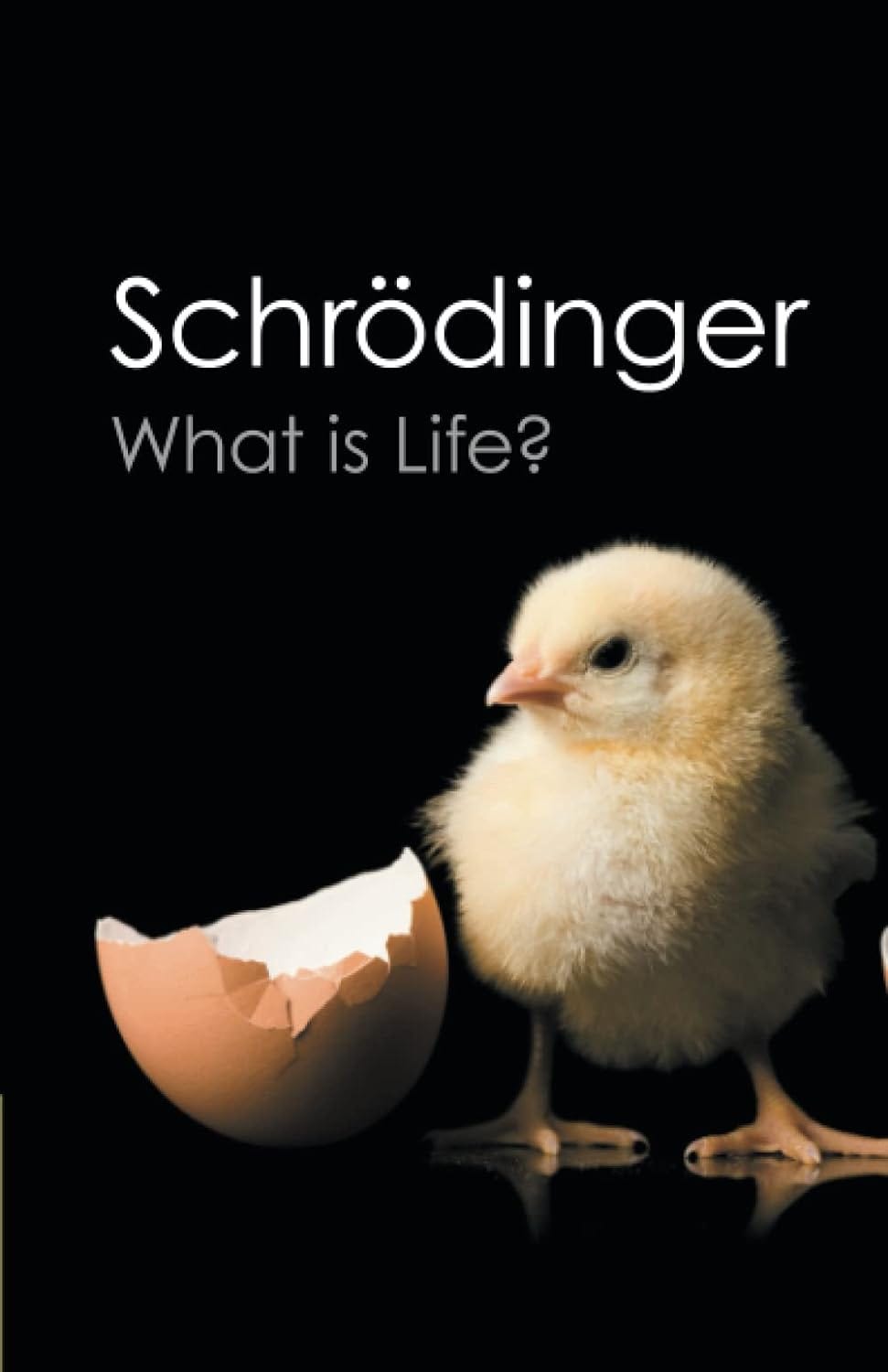
What is Life? Mind and Matter by Erwin Schrödinger
From the Publisher: Nobel laureate Erwin Schrödinger's What is Life? is one of the great science classics of the twentieth century. A distinguished physicist's exploration of the question which lies at the heart of biology, it was written for the layman, but proved one of the spurs to the birth of molecular biology and the subsequent discovery of the structure of DNA. The philosopher Karl Popper hailed it as a 'beautiful and important book' by 'a great man to whom I owe a personal debt for many exciting discussions'. It appears here together with Mind and Matter, his essay investigating a relationship which has eluded and puzzled philosophers since the earliest times. Schrödinger asks what place consciousness occupies in the evolution of life, and what part the state of development of the human mind plays in moral questions. Brought together with these two classics are Schrödinger's autobiographical sketches, published and translated here for the first time. They offer a fascinating fragmentary account of his life as a background to his scientific writings, making this volume a valuable addition to the shelves of scientist and layman alike.
Note: All links to Amazon pages are affiliated with Emergetic and a portion of each sale comes back to us. Thank you for your support!
Ben-Naim A. Entropy and Information Theory: Uses and Misuses. Entropy (Basel). 2019 Nov 29;21(12):1170. doi: 10.3390/e21121170. PMCID: PMC7514515.